
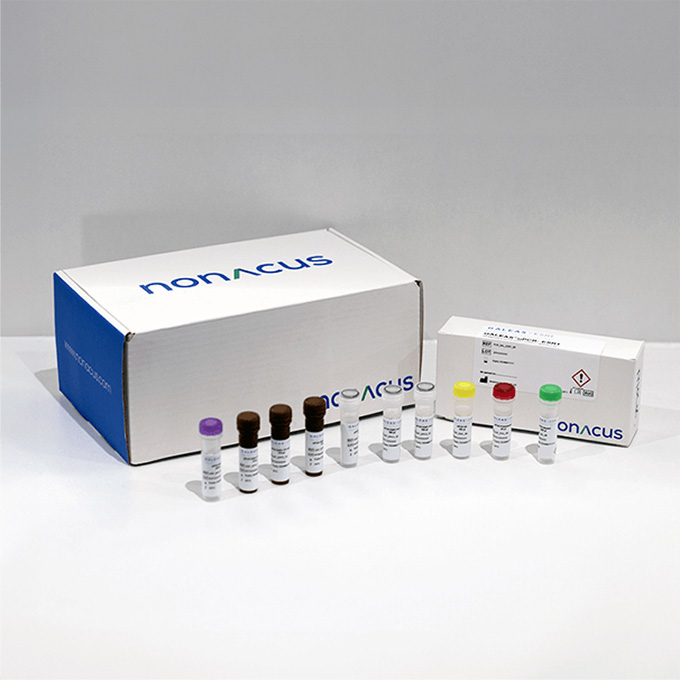
ESR1 mutation detection in liquid biopsy samples
GALEAS™ uPCR: ESR1 (RUO)
A qPCR assay with the sensitivity of a digital PCR assay designed for detecting eleven key mutations in the estrogen receptor gene, ESR1.
GALEAS™ uPCR: ESR1 (RUO) is for research use only and not for use in diagnostic procedures outside of the UK. For diagnostic applications, please see our GALEAS™ uPCR: ESR1 (UKCA) product. GALEAS™ uPCR: ESR1 (UKCA) | Nonacus
Sensitivity of digital PCR in a qPCR assay
GALEAS uPCR: ESR1 enables detection of eleven of the most prevalent mutations in the estrogen receptor gene, ESR1, known in the literature to be associated with endocrine therapy resistance. The assay uses ultrasensitive PCR (uPCR), a Nonacus proprietary technology, to deliver improved sensitivity and specificity over standard qPCR that ensures no wild-type bleed through and data comparable to digital PCR.
Simple to use, and requiring no specialist equipment, it offers laboratories a fast and cost-effective method for the accurate and sensitive detection of ESR1 mutations.
Mutations in the ESR1 gene are widely studied as potential contributors to resistance mechanisms and are present in up to 40% of ER+, HER2- metastatic breast cancers1. Liquid biopsy studies have contributed to a greater understanding of the role of these mutations in disease biology. ESR1 is an active area of ongoing research.
ESR1 variants covered by GALEAS uPCR: ESR1:
High prevalence: E380Q, D538G, Y537S, Y537N
Low prevalence: S463P, Y537C, L536H, L536R, P535H, L536Q, Y537D
Key features
- Detects eleven of the most prevalent mutations in the estrogen receptor gene, ESR1.
- Developed for use with cell-free DNA.
- Delivers improved sensitivity and specificity compared with standard qPCR.
- Simple to use, requires no specialist equipment.
Looking for broader endocrine therapy resistance profiling?
We are exploring a targeted NGS panel for endocrine resistance markers.
Performance
Assay sensitivity and specificity were evaluated using commercially available reference standards and synthetic controls containing multiple, known ESR1 variants.
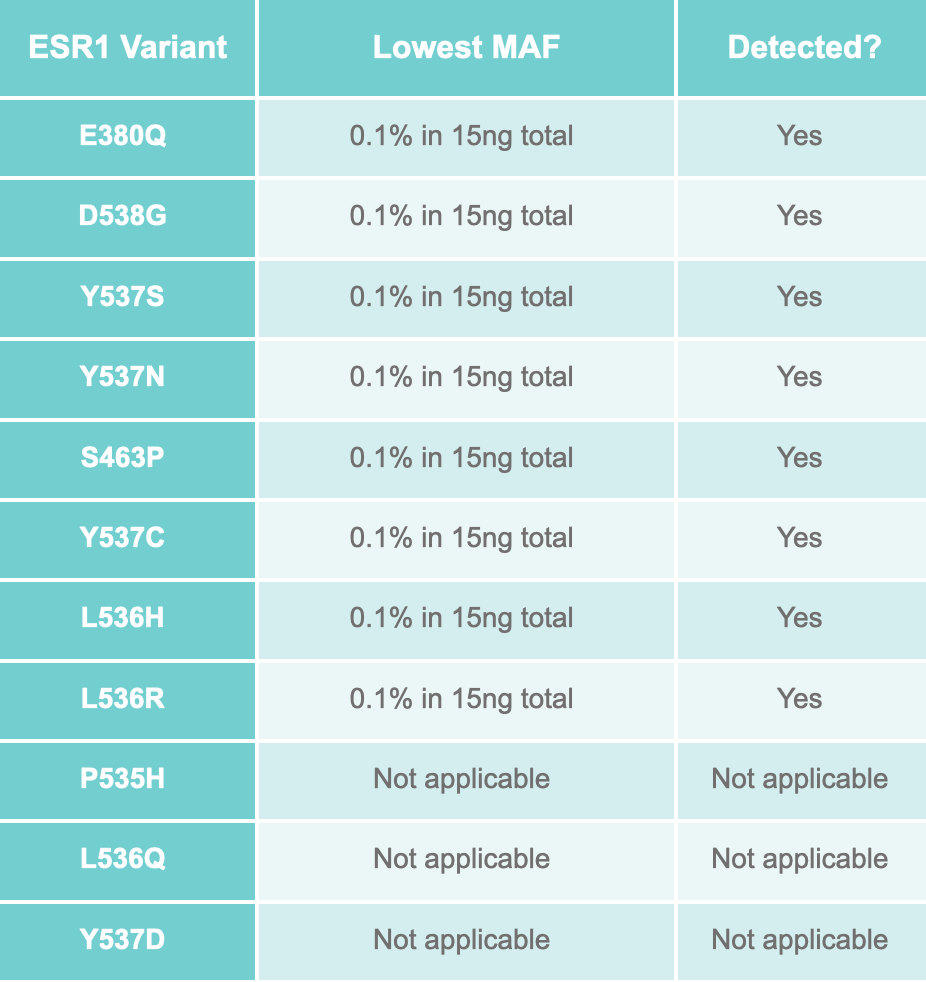
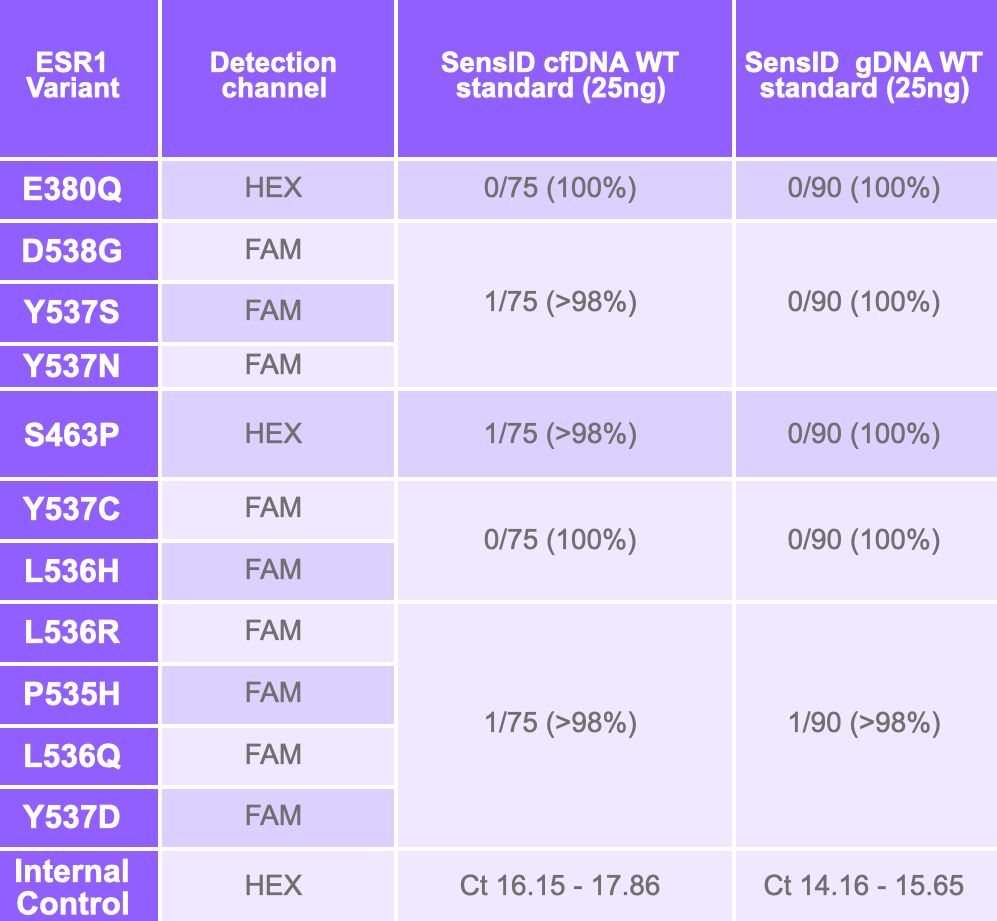
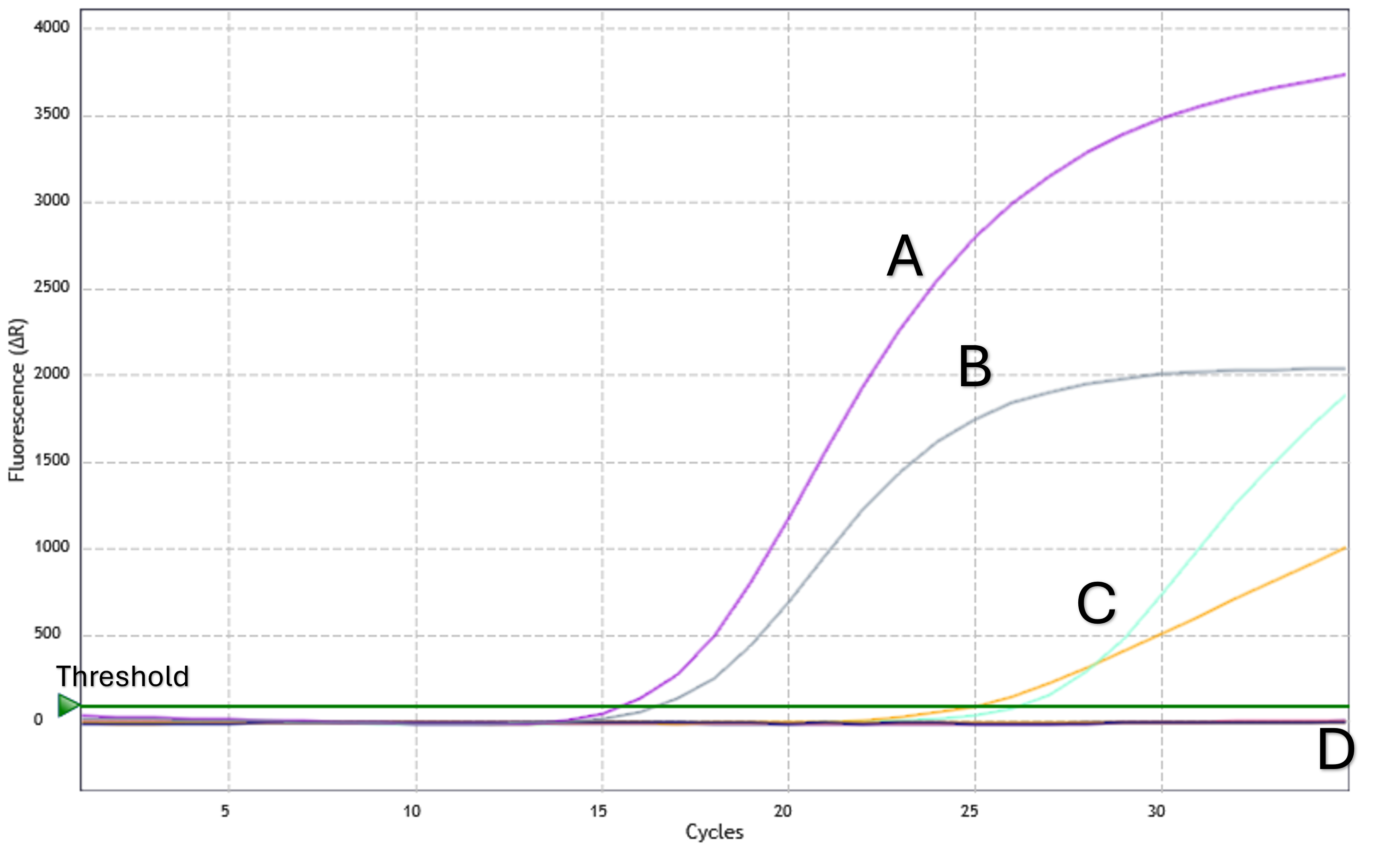
The assay was evaluated using the ESR1 reference set from SensID, GmbH at 1%, 0.3% and 0.1% MAF in a background of SensID wild-type cfDNA. Detection at 0.1% MAF was observed, with 100% specificity achieved.
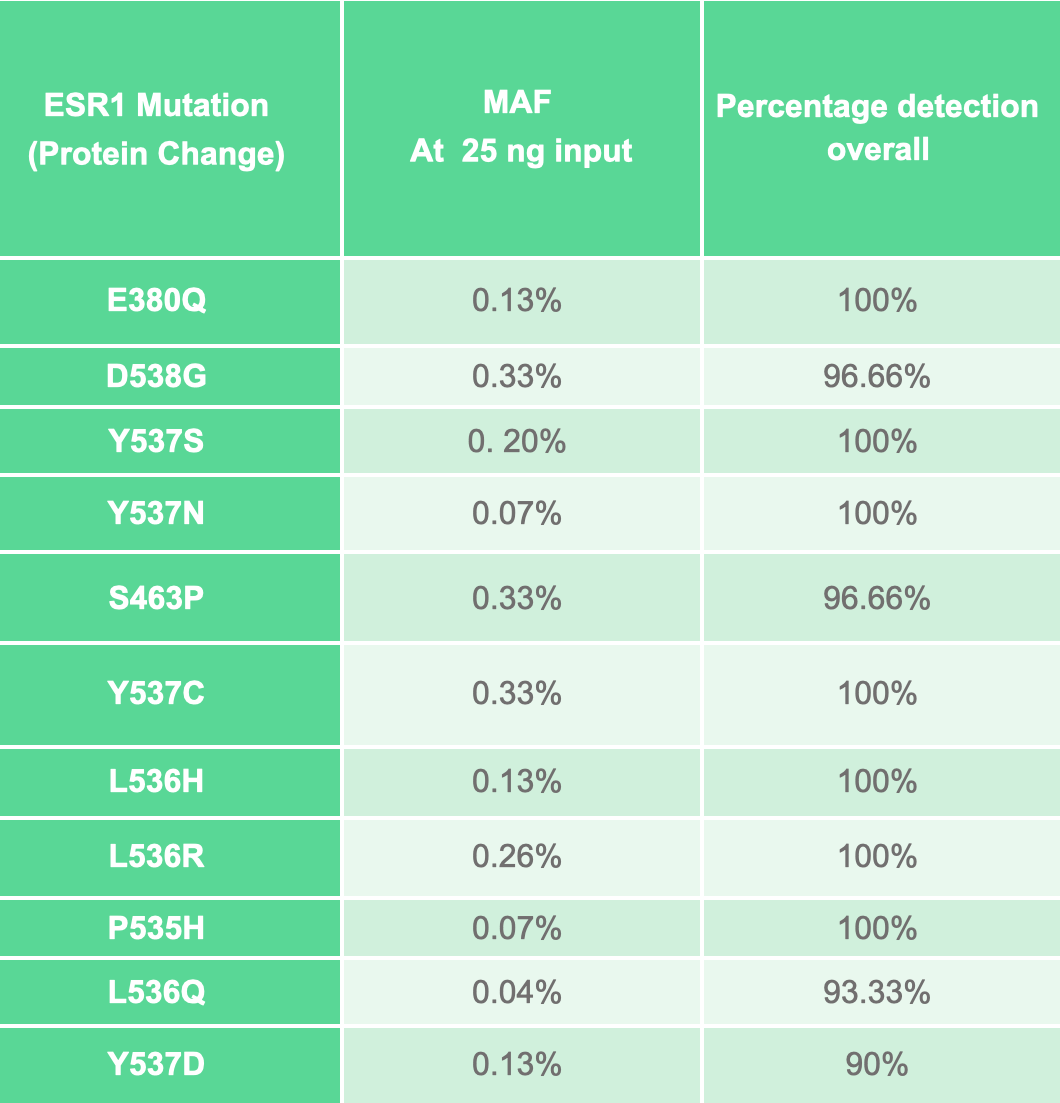
Analytical sensitivity and specificity were further evaluated using synthetic controls. ESR1 mutations were detected with a specificity of ≥98% and a sensitivity of ≥90% at mutant allele frequencies (MAF) between 0.04% and 0.33%.
Streamlined workflows; quick and easy protocols
Nonacus uPCR
Sample to data in under 3 hours:

Sample Preparation

PCR Amplification and fluorescence read out

Analysis
Why choose GALEAS uPCR: ESR1?
Accurate and sensitive
Detect ESR1 mutations with a specificity of ≥98% and a sensitivity of ≥90% at MAFs between 0.04% and 0.33%.
Key variants covered
Detection of 11 commonly reported ESR1 variants from cell-free DNA isolated from plasma samples.
Results in under 3 hours
A fast, simple qPCR protocol that requires no specialist equipment and can be implemented in most molecular research laboratories.
GALEAS uPCR: ESR1 is UKCA marked in accordance with the UK Medical Devices Regulations 2002 (as amended). Nonacus Ltd. is the legal manufacturer and is responsible for the development and ascertainment of the performance characteristics of GALEAS uPCR: ESR1.
Looking for broader endocrine therapy resistance profiling?
We are exploring a targeted NGS panel for endocrine resistance markers.